
Independence, MO · Garage Door Service
Garage Doors in Independence, MO: Built Before the Rules Changed
Most Independence garages date to the 1960s and 70s, before doors needed any insulation. See what that means for cost, cold, and repair in this service area.
- Repairs & new doors
- Springs & openers
- Serving 8 nearby communities
What Is Going On
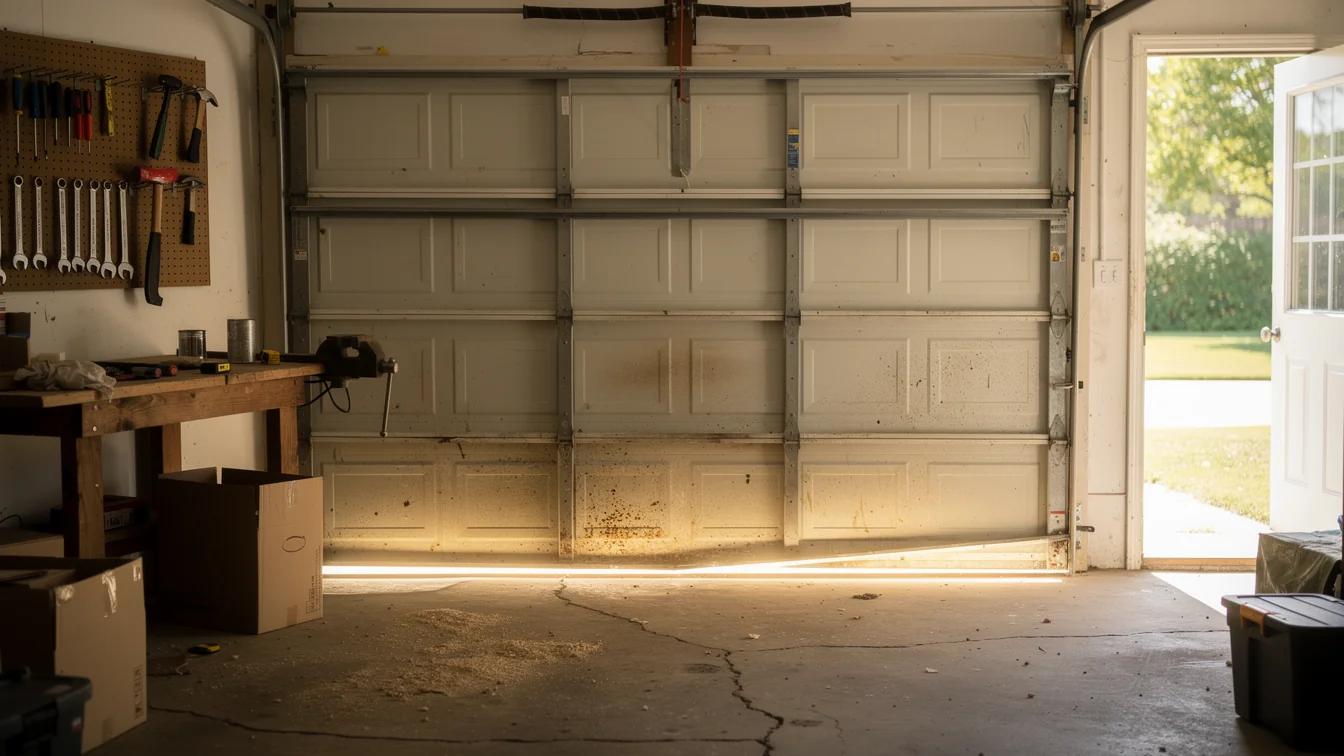
Walk the blocks around Independence and you're mostly looking at houses built between 1951 and 2005, with the bulk of that stock going up in the 1960s and 70s - the median build year across the area is 1973. That matters for garage doors because insulation requirements for residential overhead doors weren't part of the codes those houses were built under. The original door, if it's still hanging, is almost certainly a single-skin steel or wood panel with no foam core and no thermal break at the track.
Across the 24 named communities we work in, that same pattern holds: Sugar Creek, Raytown, Grain Valley, and the rest grew up in the same building boom, so the door problem isn't unique to one street - it's the whole service area. Hardware from that period also tends to be side-mounted torsion or older extension spring setups, parts that newer trucks don't always carry stock replacements for.
If your door still has the factory panel from a 1965 build, you're not dealing with wear and tear so much as a design that predates the whole idea of an insulated garage. That's not a flaw in the door - it's just what building before 1976 energy code revisions looked like.
What It Costs
We don't have a price list to hand you here, and we're not going to invent one. What we can tell you is how the decision usually breaks down on a house from this era. A single, non-insulated panel door on 1960s-70s hardware is often cheaper to patch than to match - finding an exact replacement panel for a 50-year-old track system gets harder every year, and sometimes it's not available at all.
Median household income across the service area sits at $73,646, and most owner-occupied houses here were built in that same mid-century window - 57,255 of them, out of roughly 108,343 households total. That's a lot of homes carrying the same original equipment, which is part of why full replacement, not patchwork repair, ends up being the more common call on doors this old: the labor to source obsolete parts can cost more than starting over with a door built to current standards.
Our honest limitation: if your opener or spring hardware is a discontinued model from that period, we may need to replace more than you came in expecting, because matching old parts isn't always possible.
What the Weather Here Does to It
This area sits in a cold-moderate climate band, which means real winter stress on a door that was never built to hold heat. An uninsulated steel panel from the 1960s or 70s conducts cold straight through - you'll feel it standing next to the door on a January morning, and so will the hardware. Steel contracts in the cold, and on older doors that means tracks and rollers that were snug in August can bind or rattle once temperatures drop.
Condensation is the other half of it. A single-skin door with no thermal break lets warm garage air meet a cold steel surface, and that moisture doesn't just sit on the panel - it works into seams, fasteners, and the bottom seal over years. On a door that old, that's decades of freeze-thaw cycling on original hardware, not a new problem.
None of this is dramatic weather - no named storm, just the ordinary swing of a cold-moderate winter repeated every year since the house was built. On original 1960s-70s equipment, that ordinary cycle is the whole story.
What Changes With the Season
On houses from this era, the shift that matters most isn't a single cold front - it's the compounding of a door never designed for thermal cycling through another winter. Torsion springs on original side-mounted hardware lose tension gradually, and the cold makes that loss more noticeable: a door that lifted easily in July can feel heavy by February on the same unadjusted spring.
Coming out of winter, check the bottom seal first. On a non-insulated panel door, the seal is doing nearly all the weatherproofing work, and years of freeze-thaw against original steel tends to crack or flatten it faster than it would on a newer insulated unit.
If you're on one of the original garages anywhere from Sugar Creek to Grain Valley, the honest seasonal advice is the same: don't wait for a full failure. A door built before insulation standards existed doesn't fail all at once - it loses a little function each cold season until a spring finally goes or the track finally binds for good.
Frequently asked questions
Why does my garage door feel so much heavier in winter?
On original 1960s-70s hardware, torsion springs lose tension gradually, and cold steel makes that loss more obvious. If your door was built before insulation rules existed, there's no foam core buffering the swing in temperature either, so the whole system - door, track, spring - reacts more to seasonal cold than a newer insulated unit would.
Should I replace my old door or just fix the spring?
Depends on what's failing. A worn spring on an otherwise sound door is usually a straightforward swap. But if the panel itself is original steel from the 1960s or 70s and the track hardware is discontinued, sourcing exact parts gets harder every year, and full replacement can end up being the more practical call.
Is my garage door even supposed to be insulated?
Not if it was built to the code standards in place when most houses in this area went up - the 1960s and 70s predate residential garage door insulation requirements. An uninsulated single-skin door isn't broken or undersized; it's just original equipment from before those rules existed.
Related garage door services in Independence
More garage door guides
Book garage door service in Independence
Call now or request a quote - tell us what the door is doing and where you are.