
Independence, MO · Garage Door Service
Garage Door Panel Replacement Around Independence
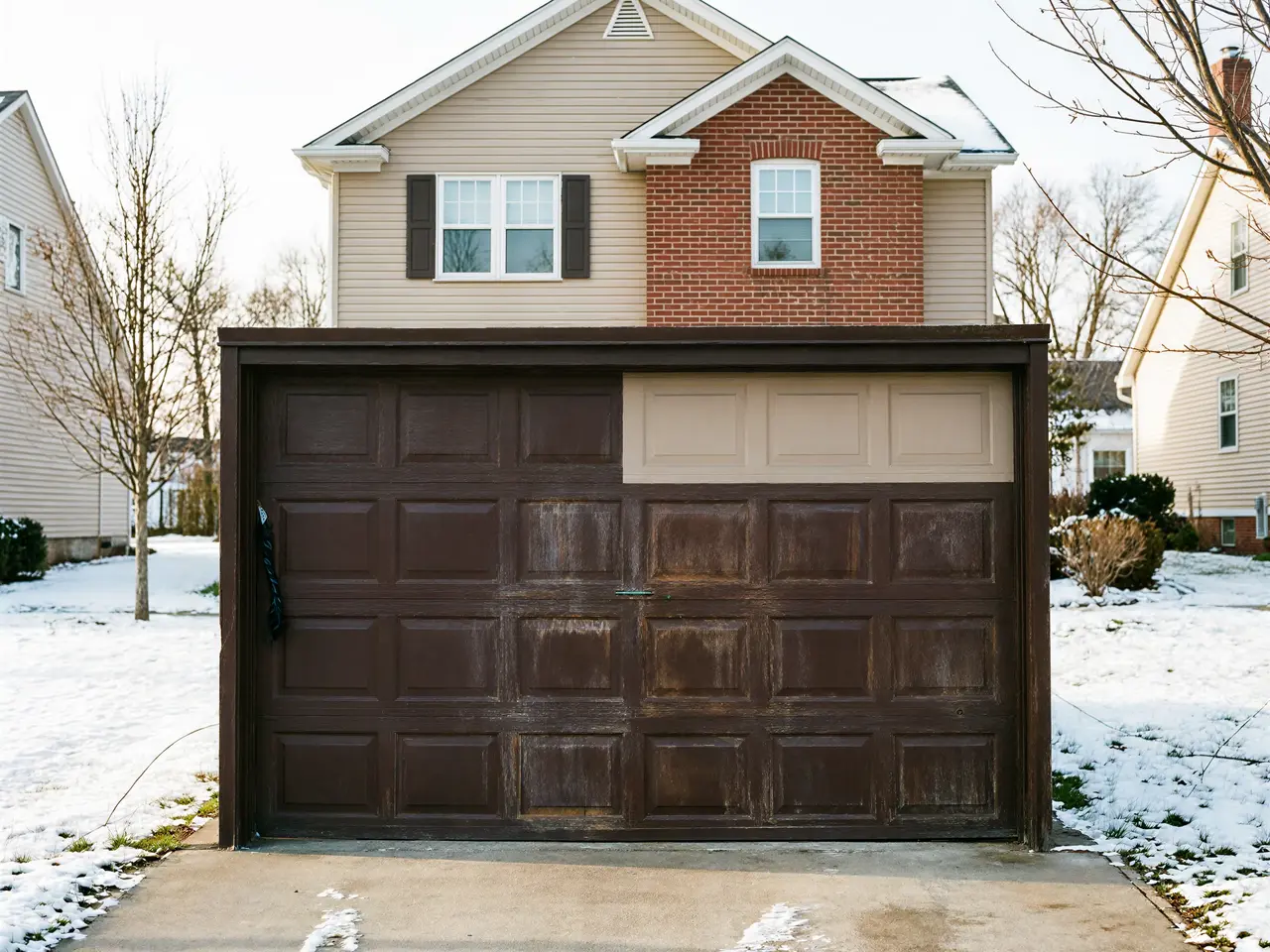
Dented or cracked garage door panel in Independence? We match panels on 1950s-2000s doors and explain when replacement beats a full door swap.
- Repairs & new doors
- Springs & openers
- Serving 8 nearby communities
The DIY Question
A cracked or caved-in panel looks like a job you can handle with a kit panel off a shelf, and sometimes it is. If the dent is cosmetic and the door still tracks straight, a single-panel swap on a steel sectional door is a reasonable weekend job if you've got a second set of hands and the right clamps to hold the section square while you bolt in hinges.
Where it stops being DIY: if the dent is on a bottom panel that also carries the bottom bracket and cable attachment, or if the door is one of the older one-piece swing-up styles still found on houses built before 1973 in this area, you're not swapping a panel, you're matching an entire discontinued door. We don't carry parts for every door ever installed here, and we'll tell you straight if your model means custom fabrication or full replacement instead of a patch.
The other thing DIY skips is torsion spring tension. You have to unload the spring before you pull panel bolts on most sectional doors, and that's the step that sends people to the ER, not the panel itself. If your garage has a torsion spring over the header, that's where we'd rather you call first and decide after.
What Causes It Around Here
Most of the housing stock in this service area went up between 1951 and 2005, with the bulk of it in the 1960s and '70s across two dozen named neighborhoods. That matters for panels because doors from that build era were almost all steel sectional with painted finishes that chalk and thin over four or five decades. Thin steel dents easier than the heavier gauge panels sold today, and a backed-into door or a stray basketball leaves a crease that doesn't pop back out.
The cold-moderate climate here adds a second failure path: freeze-thaw cycling. Water gets into a seam or a prior dent, freezes, and the panel skin separates from the foam core underneath it. You end up with a panel that looks fine from six feet away and crunches when you press on it. That's a panel replacement call even without a visible dent, because a delaminated panel won't hold screws for weatherstripping or a new hinge.
We see this most on homes in the older pockets built before 1973 - original doors on original hardware, now with one or two panels that have outlived the rest. The door still runs, but the weak panel is the thing that'll eventually take the opener or the track down with it.
Getting It Booked In
When you call, we need the door's brand or at least a photo of the label inside the top section, the panel's position (top, bottom, or a middle section), and whether the dent involves a hinge or bracket mounting point. That's what lets us tell you on the phone whether we're ordering a matching panel or quoting a full door.
Panel matching gets harder the older the door is. If your door dates to the 1960s or '70s building wave common across this area, the exact panel profile may not be manufactured anymore, and we'll be upfront if that's the case rather than order something that won't line up with the rest of the door.
On the visit, we pull the damaged section, check the hinges and rollers it was carrying, and reset tension if a spring had to come off. We don't push a full door replacement on a job that's really a single panel - but we'll say so plainly if patching one panel on a door that's otherwise near the end of its life isn't worth the labor.
What You Are Seeing
A bowed or buckled panel on a double-wide door usually means a direct hit - a bumper, a mower, a kid's bike - and the fix is a straight swap if the section is still available. A rippled texture across the face of a panel that's never been hit is usually hail or age-related skin separation from the cold-moderate freeze-thaw pattern here, and that panel needs replacing even though nothing dented it.
Rust streaks at a seam between two panels tell you water's been sitting in the joint, which is common on older steel doors from the pre-1973 housing stock once the factory coating wears through. That's worth fixing before it spreads to the panel next to it.
If you see daylight or a gap along the bottom panel where it meets the floor, that's often a bent bottom bracket, not the panel itself - different repair, cheaper fix. Tell us which you're seeing when you call and we'll know roughly what we're walking into before the truck leaves.
Frequently asked questions
Can you match the panel on an older door, or do I need a whole new door?
It depends on the door's age and brand. Doors from the 1960s-70s building wave common in this area often used panel profiles that aren't made anymore, so matching isn't always possible. We check the label inside the top section first and tell you honestly if it's a panel job or a full-door job.
Why does my panel look fine but crunch when I press on it?
That's skin separation from freeze-thaw cycling, common in this cold-moderate climate when water gets into an old seam and freezes repeatedly. The steel skin pulls away from the foam core underneath. It looks okay from a distance but won't hold hardware, so it needs replacing even without a visible dent.
Is it safe to replace a bottom panel myself?
Not usually. Bottom panels often carry the bottom bracket and cable attachment, and most sectional doors need the torsion spring unloaded before you pull panel bolts. That spring tension is the dangerous part, not the panel swap itself, so we'd rather you call before you start.
Related services
By Neighborhood
Panel Replacement across the Independence area
We also handle panel replacement in these Independence-area suburbs.
Book garage door service in Independence
Call now or request a quote - tell us what the door is doing and where you are.