Independence, MO · Garage Door Service
Is Your Old Garage Door Worth Fixing, or Time to Replace It
Independence homes mostly date to the 1960s-70s building boom. Here's how that housing stock and the area's cold winters decide whether your old door is worth repairing.
- Repairs & new doors
- Springs & openers
- Serving 8 nearby communities
What Is Going On
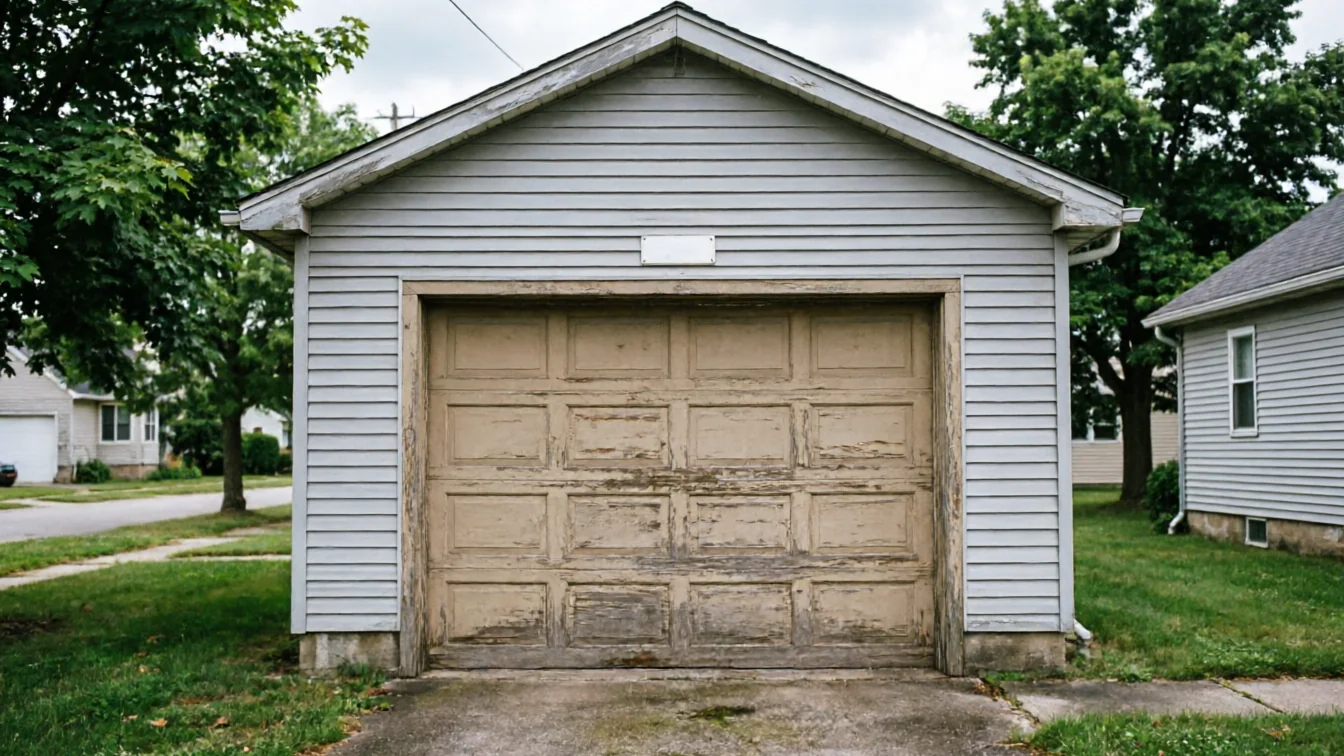
Most of the housing across this service area went up between 1951 and 2005, with the thick of it in the 1960s and 70s, spread across 24 named neighborhoods from the older core out toward places like Sugar Creek and Blue Vue Hills. That matters because a door is not a standalone part. It's a system: track, rollers, cable, spring, and opener, all sized and installed to match the house and garage opening as it was built. A door from that 1960s-70s wave was likely replaced or upgraded at least once already, which means what you have now could be original hardware on a newer skin, or a newer opener bolted to an original track that's been bent back into shape more than once. Before anyone tells you a door is "worth fixing," they need to know which parts are actually original and which have already been swapped. A door that's had one section replaced and the track re-aligned is a different conversation than one that's never been touched since the house was built. We look at the track alignment, the spring type, and whether the panels still match before we say repair or replace - guessing from the driveway isn't enough.
What It Costs
We're not going to put a number here that doesn't hold up - every garage and every door is different, and a flat price quoted without seeing the hardware is a guess dressed up as a fact. What we can tell you is how the decision actually gets made: if the track is true, the opener is sound, and it's a spring or cable job, that's almost always worth fixing regardless of the door's age. If the door itself is warped, the panels no longer seal, or the track has been bent and re-bent, you start pricing against a new door instead of a repair. With median household income across the service area at $73,646, most owners here are making that call on a real budget, not an abstract one, which is exactly why we walk through the repair-versus-replace math on site instead of over the phone. One honest limit: if a part is obsolete - something off a door that hasn't been made in decades - we may need to source it or recommend replacing just that section, and that can add lead time we don't control.
What the Weather Here Does to It
Independence sits in a cold moderate climate band, and that shows up in the hardware before it shows up anywhere else. A steel door built before insulation standards tightened flexes more in a hard freeze, and the gap between panel and frame opens just enough for wind to find it. Springs lose tension faster in cold weather because cold steel is less forgiving under load - that's physics, not a sales pitch, and it's why a spring that's been fine for years can suddenly snap on a cold morning. Rollers in older steel or nylon track bind up when grease thickens in the cold, and a door that used to glide starts groaning or sticking halfway up. None of this means every old door needs replacing before winter. It means an older door in this climate needs its hardware checked before the cold sets in, not after it's already failed on the driveway at 6am.
What Changes With the Season
Spring is when the freeze-thaw damage from winter actually shows up - a track that was fine in January can be visibly out of alignment by March once the ground around the slab has shifted and settled again. That's a good time to check alignment on any door built on the older stock common across this area, especially on houses from the 1960s-70s wave where the slab and frame have had the most decades to move. Summer heat is gentler on the hardware here than the cold is, but it's worth checking weatherstripping and seals while they're easy to see. Heading into fall, before the cold moderate winter pattern sets back in, is the right window to get springs and cables looked at - not because every door needs it, but because a spring under full winter load is a worse time to find a problem than a dry October afternoon.
Frequently asked questions
My house was built in the 1960s - is the garage door original?
It's possible, but unlikely to be fully original. Houses from that era in this area have usually had at least one door panel, opener, or spring replacement by now. We check the track, hinges, and hardware stampings on site to tell you what's original and what's already been swapped before we recommend anything.
Does the cold here actually break springs, or is that just sales talk?
It's real. Cold steel holds less tension than warm steel, so a torsion spring that's been marginal all year is more likely to fail on a hard-freeze morning than in July. It's physics, not an upsell - we just see more spring calls in the cold months than the warm ones.
Is it ever not worth fixing an old door?
Yes. If the panels are warped, the seals no longer close, or the track has been bent and straightened more than once, you're often better off pricing a new door than chasing the next repair. We'll tell you straight if that's where your door is instead of patching it again.
How fast can you get an obsolete part for an old door?
It depends on the part. Some older hardware isn't made anymore, and sourcing it or a close match can take longer than a standard repair. We'll tell you up front if that's the situation rather than promise a timeline we can't control.
Related garage door services in Independence
More garage door guides
Book garage door service in Independence
Call now or request a quote - tell us what the door is doing and where you are.