
Independence, MO · Garage Door Service
Why a Door Goes Off Track in an Independence Garage
Independence houses mostly date from the 1960s-70s boom, with original track hardware still in many garages. Here's why doors jump track and what the cold does to it.
- Repairs & new doors
- Springs & openers
- Serving 8 nearby communities
What Is Going On
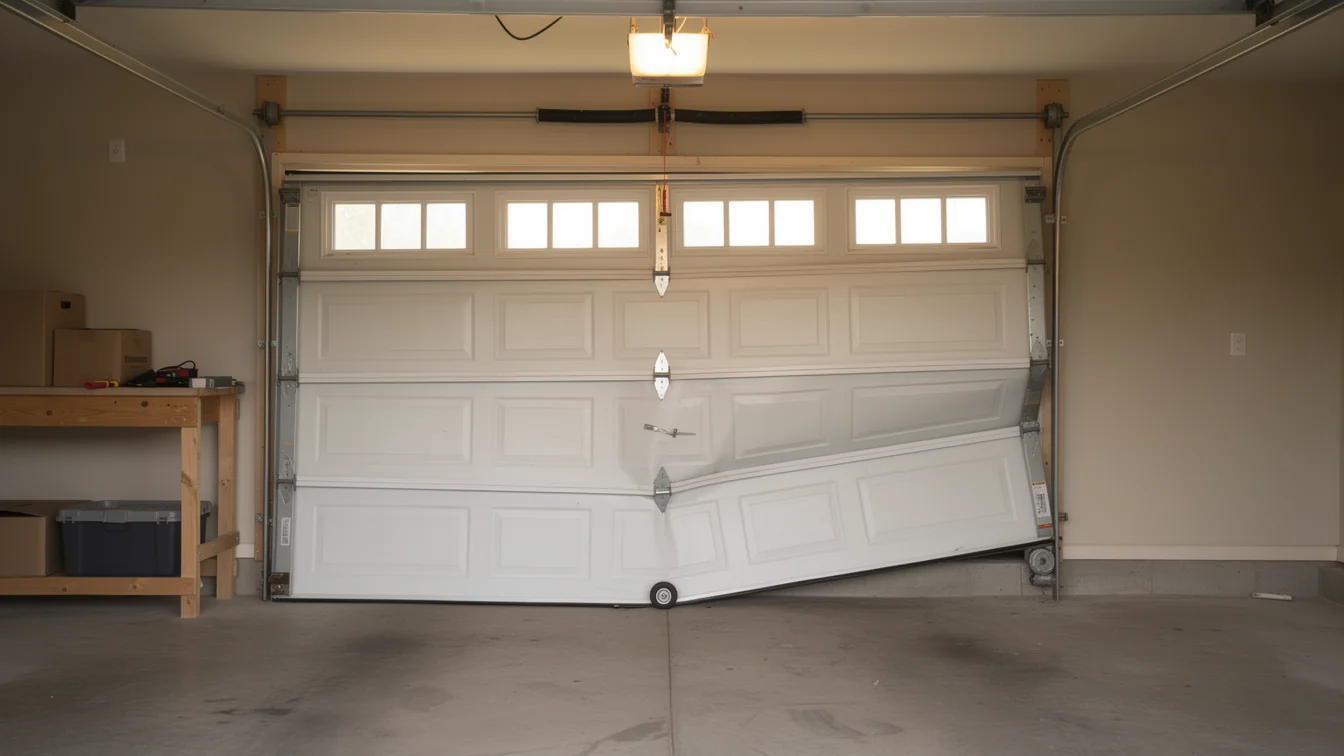
A door goes off track when the rollers slip out of the channel that guides them up and down, usually at a bent section or a loose bracket. In a lot of Independence garages this starts with hardware that's never been touched since the house was built. Housing stock here runs 1951 to 2005 with a median build year of 1973, and most of that is concentrated in 1960s-70s construction across the older parts of town. That means a lot of track brackets held on with the original screws, galvanized steel that's thinned out over fifty-plus years, and rollers that were never swept for nylon replacements.
The usual triggers are a bent track from something hitting it (a car bumper, a ladder, a kid's bike), a bracket that's worked loose from the framing, or cables that have stretched unevenly so one side of the door rides higher than the other. On older doors with single-strand lift cables, a frayed cable can yank the door sideways hard enough to pop a roller clean out of the rail. None of this is dramatic until the day it is - a door that's been rattling for months can jump track in one cold morning.
What It Costs
We don't post a flat number here because the fix depends entirely on what's wrong - a single bent section of track and a couple of rollers is a different job than a door that's been yanked off both sides and warped a panel in the process. What we can tell you: if your garage is original to a 1960s or 70s build, we're often replacing hardware that's no longer made to the same spec, which means swapping brackets and track sections rather than patching one piece. That's not a bad thing, but it is a different conversation than a five-year-old door with a bent roller.
One honest limit: if the door has come off track more than once in a short stretch, or a panel is bent where the roller pulled loose, re-hanging it is a short-term fix. At that point you're looking at a track and roller replacement, and sometimes the whole door, rather than nudging it back into the channel and calling it done.
What the Weather Here Does to It
Independence sits in a moderate-cold climate band, and that matters more to garage door hardware than most people think. Steel track and brackets contract in cold weather, and on a garage that isn't insulated - which describes a good share of the 1960s-70s housing stock in this area - that contraction can be enough to pull a marginal bracket loose or tighten a bent spot in the track just enough to catch a roller. Grease that was fine in August turns stiff in January, which means more resistance on the rollers right when the metal is least forgiving.
The pattern we see is a door that's been slightly out of alignment all year finally jumping track on the first hard cold snap, not because anything new broke but because cold took up the slack that summer heat had been hiding. It's not dramatic weather causing it - it's ordinary cold acting on hardware that was already due for attention.
What Changes With the Season
As temperatures drop, lubricant thickens, metal contracts, and anything marginal in the track or bracket alignment gets less forgiving, not more. A door that closes a little crooked in July can bind hard enough in a cold spell to pop a roller. That's the pattern worth watching for in a climate band like this one - moderate cold, not extreme, but enough swing through the year to stress hardware that's already decades old in much of Independence's housing.
Spring brings the opposite problem: as things warm and metal expands again, a door that was binding may free up just enough that you stop noticing a bent track until it goes off again next winter. If your garage dates to that 1960s-70s wave of construction common across this area, it's worth a look at brackets and track condition before the first real cold snap, not after the door's already jumped.
Frequently asked questions
Why did my garage door suddenly come off track in the cold?
Cold steel contracts and stiff grease adds resistance right when the track is least forgiving. If a bracket or section of track was already slightly bent or loose, the first hard cold snap is often what finally lets a roller pop free. It's rarely new damage - usually it's wear that was there all along.
Can I just push the door back on the track myself?
Sometimes, if it's only off by a little and the track isn't bent. But if a cable is frayed or a panel took the hit, forcing it back on can bend things further or let the door drop unexpectedly. If you're not sure what caused it, it's worth having it looked at before running the opener again.
My house is from the 1960s and the door has never been replaced - is that the problem?
It can be a factor. Original track and brackets from that era are steel that's had fifty-plus years to thin and loosen, and the hardware specs have changed since then. It doesn't mean it needs replacing today, but it does mean repairs sometimes involve swapping a section rather than patching the original part.
Does this happen more in winter than summer?
Yes, more often. Metal contracts and lubricant stiffens in the cold, which adds strain to any bracket or track section that's already slightly out of alignment. Summer heat tends to loosen things back up just enough to mask a problem until the next cold stretch.
Related garage door services in Independence
More garage door guides
Book garage door service in Independence
Call now or request a quote - tell us what the door is doing and where you are.