Independence, MO · Garage Door Service
Roller Replacement for Sugar Creek's 1950s Garage Doors
Sugar Creek homes mostly date to the early 1950s, and the original steel rollers on those doors are past due. We replace them from our Independence shop, 5 miles out.
- Repairs & new doors
- Springs & openers
- Serving 8 nearby communities
What Can Go Wrong
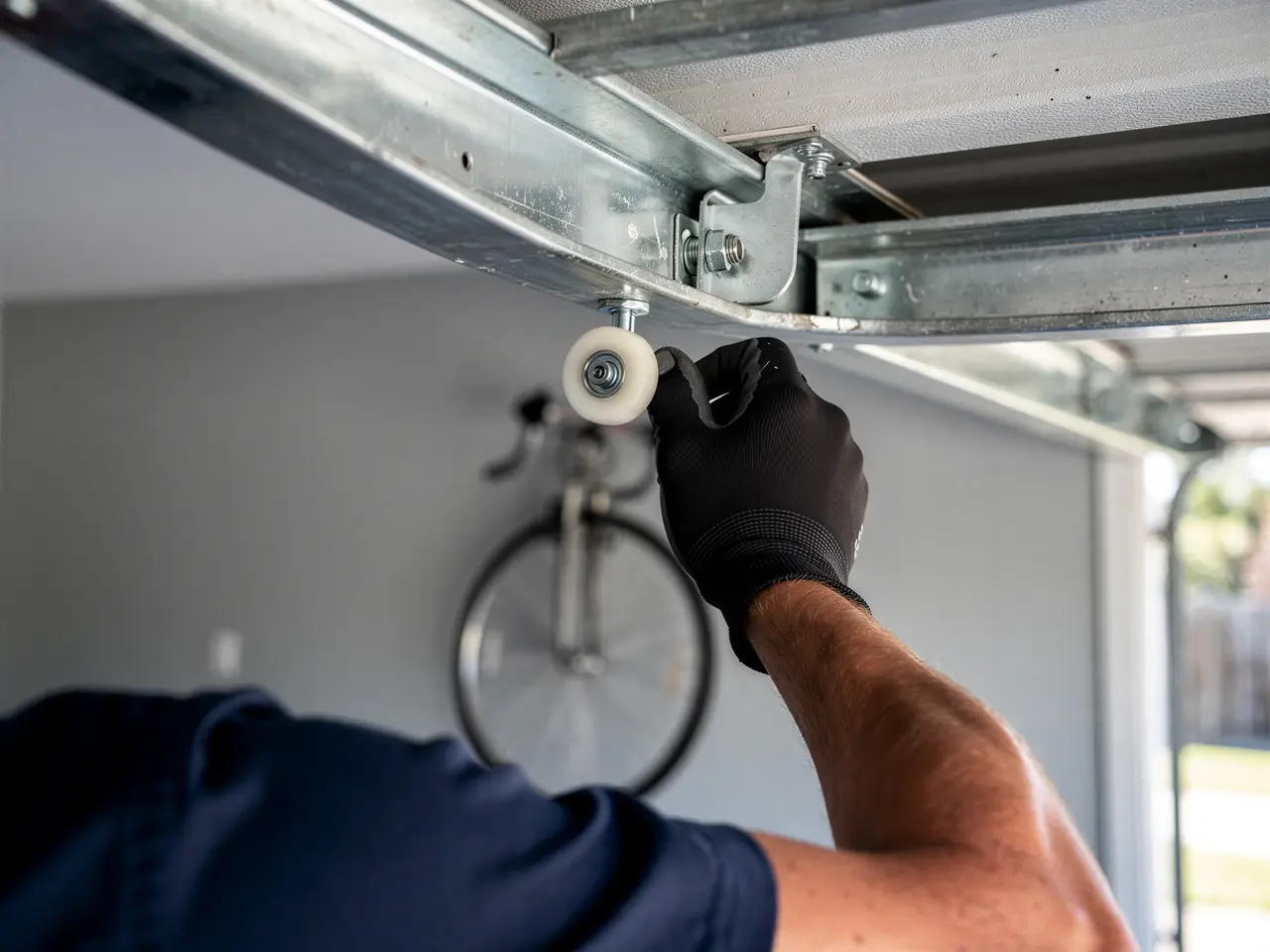
Sugar Creek's median household income sits at $57,467, noticeably lower than the wider Independence service area's $73,646. That gap matters here because it sets where the repair-or-replace line falls: on a budget like this, swapping worn rollers instead of the whole door is usually the right call, not a downgrade. Most houses in Sugar Creek went up around 1953, which means steel doors on steel rollers running in steel track, with no nylon anywhere in the system. Those original rollers were never sealed and never lubricated at the factory. After seventy-plus years the bearings are dry, the stems are pitted, and the track itself has worn a groove that matches the old roller's exact diameter. Swap in a roller of a different size without checking the track and you get binding, not a fix. The common failure here is a roller that's seized in its bracket, so the door drags on one side and the opener strains to pull it the rest of the way. Left alone, that strain moves to the cables and then the spring, which turns a $30 part into a full hardware job. We see this pattern across the older pockets of this stretch of Jackson County more than in newer subdivisions, because the housing age is the driver, not the brand of door.
What It Costs
We don't publish a flat number for roller replacement because the job size depends on what's actually worn. A straightforward swap of rollers on a door that's otherwise sound is a small repair. A door where the track has worn unevenly to match the old roller, or where one bent roller has been quietly chewing the track for years, costs more because the track needs attention too. Given Sugar Creek's median income, we price roller jobs to stay in repair territory whenever the door allows it. We'll tell you plainly if a roller problem has already dragged the track or opener into failure, because at that point patching rollers alone just delays the real job. We don't guess a figure over the phone before we've seen the door; too many of these 1953-era doors have had one bad repair already stacked on top of the original hardware.
Stocked Parts
We carry nylon rollers in the standard stem lengths that fit the steel track used on Sugar Creek's early-1950s housing stock, plus the shorter-stem steel rollers for the handful of doors still running original hardware nobody makes new anymore. Sealed-bearing nylon is what we install by default on these jobs, since it runs quieter and doesn't wear the track the way bare steel does. What we don't always have on the truck is a replacement for track sections that are badly worn or bent out of true - that's a part we order rather than carry, and it's the one real lead-time gap on this job. If your door needs new track along with rollers, expect a short wait on that piece even if the rollers themselves go in the same day.
What Causes It Around Here
The cause in Sugar Creek is almost always age, not abuse. With a median build year of 1953, the housing stock here predates nylon rollers entirely, and most owners have never replaced the originals even once. Add Kansas City's cold-moderate climate band - freeze-thaw cycles that stiffen old grease and crack dry steel bearings - and you get rollers that fail slowly over winters rather than all at once. Doors that get opened and closed daily wear faster than ones used occasionally, which is just mechanics, but in a town this size, with 1,329 households, the pattern across homes tends to track the building era more than anything else.
How We Fix It
We come out from our Independence shop, about 5 miles away, to look at the door before we quote anything. On site we check the rollers, the track alignment, and whether the opener has been compensating for drag - that last part tells us if this is a roller-only job or something bigger. If it's rollers, we pull the old ones, check the track for the groove wear that's common on these original 1953-era setups, and set new nylon rollers to the stem length the track actually needs. We test the door through a full open-close cycle under its own spring tension before we call it done, because a roller job that still binds halfway isn't finished.
Frequently asked questions
Are my garage door rollers original to the house?
If your Sugar Creek home dates to the early 1950s like most of the area, there's a good chance nobody has ever swapped the rollers. Steel rollers in steel track were standard then, and they weren't built to be serviced, so many are still the factory originals seventy years later.
Can you just replace the rollers without touching the track?
Often yes, if the track hasn't worn into a groove matching the old roller size. We check that on site. If the track has worn unevenly, rollers alone won't fix the drag, and we'll tell you before doing work that won't solve the problem.
Do you have a shop in Sugar Creek?
No, we work out of Independence and travel to Sugar Creek, about 5 miles away, for every job. There's no separate branch here, just the same crew coming from the main shop.
Will new rollers make my door quieter?
Usually, yes. Sealed nylon rollers run quieter than the bare steel rollers common in this area's older housing stock, partly because nylon doesn't clatter against the track the way worn steel does.
More garage door services in Sugar Creek
Book garage door service in Independence
Call now or request a quote - tell us what the door is doing and where you are.